 By Santosh Kumar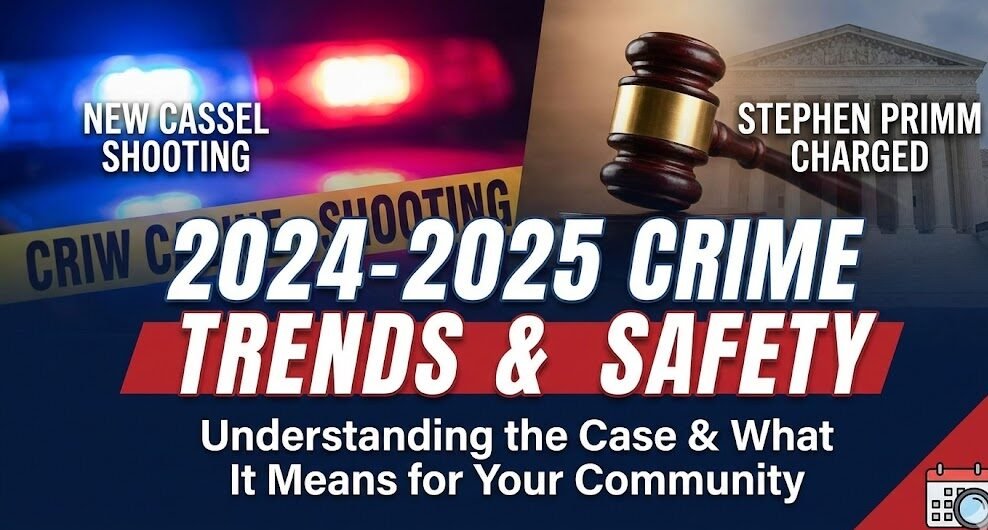
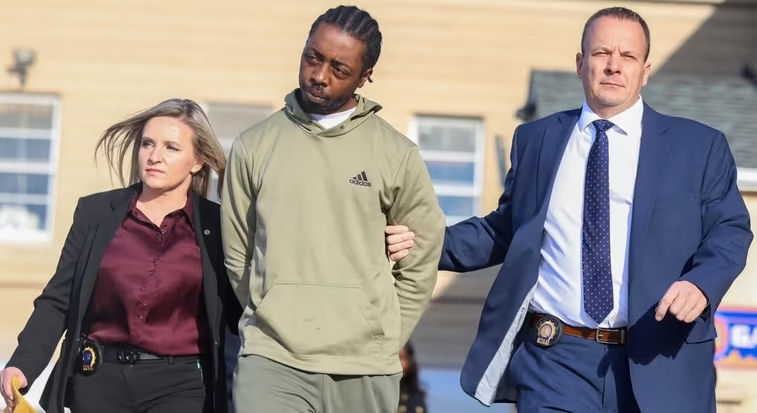
On a quiet New Year’s Day in early 2024, a tragic shooting ripped through the close‑knit community of New Cassel, Long Island. The incident ended the life of a 40‑year‑old local resident and quickly became front‑page news across Nassau County. By the following weekend, police announced that Stephen Primm, a 34‑year‑old man from Bay Shore, would face second‑degree murder and criminal possession of a weapon charges.
While the headlines focus on the names and the charges, the story offers a broader lens into how violent crime, courtroom procedures, and community response are evolving in the post‑pandemic era. Below we unpack the key elements of the case, explore why it matters for 2024‑2025 crime trends, and share practical steps residents can take to stay safe.
- Date & Location: Early morning, New Cassel, a hamlet within the Town of North Massapequa, on New Year’s Day 2024.
- Victim: A 40‑year‑old male, known locally for his involvement in community sports leagues.
- Suspect: Stephen Primm, 34, a resident of Bay Shore, a neighboring village on Long Island’s South Shore.
- Charges: Second‑degree murder (a deliberate killing without pre‑meditation) and criminal possession of a weapon.
Police say the shooting followed an argument that escalated quickly, ending with a firearm discharge that struck the victim. The exact motive remains under investigation, but the incident underscores how quickly a disagreement can become lethal when firearms are involved.
Data from the New York State Division of Criminal Justice Services shows a modest increase in non‑gang, argument‑driven shootings across suburban counties during 2023‑2024. While overall violent crime rates have plateaued, incidents that start as personal disputes and end in gunfire have climbed 6 % compared with the previous two‑year average. The Primm case fits squarely into this pattern, reminding policymakers that “argument‑to‑shooting” pathways remain a critical risk factor.
The arraignment of Stephen Primm took place at the First District Court in Hempstead just days after the arrest. This rapid progression reflects a broader push within Nassau County to move high‑profile cases through the docket efficiently, a move designed to maintain public confidence. In 2024, the county introduced an online portal where residents can view docket entries and court calendars in real time—an effort to demystify the judicial process.
Following the shooting, the Nassau County Police Department held an emergency town‑hall in New Cassel, inviting residents to voice concerns and ask questions directly of investigators. This kind of community‑engagement strategy has become more common across the state since 2022, as departments seek to counteract mistrust and encourage early reporting of conflicts before they turn violent.
- Arrest & Initial Booking – After the police identify a suspect, they take the individual into custody, record fingerprints, and secure any weapons involved.
- Initial Appearance – Within 48 hours, the suspect appears before a judge, who informs them of the charges and sets bail (or denies it, depending on flight risk).
- Arraignment – The formal reading of charges occurs; the defendant enters a plea (guilty, not guilty, or no contest). In Primm’s case, the plea is pending.
- Discovery Phase – Both prosecution and defense exchange evidence, including forensic reports, witness statements, and video footage.
- Pre‑Trial Motions – Attorneys may file motions to suppress evidence or request a change of venue if media coverage is deemed prejudicial.
- Trial – If a plea agreement isn’t reached, the case proceeds to a jury trial where the burden of proof lies with the prosecution (“beyond a reasonable doubt”).
- Sentencing – Upon conviction, judges consider prior record, remorse, and mitigating circumstances when deciding on imprisonment length, fines, or alternative sentencing.
Understanding these steps helps residents recognize why a case that seems “resolved” in a newspaper headline can actually be months or years away from a final verdict.
| Situation | Actionable Step | Why It Helps |
|---|---|---|
| Tensions Escalating in Public | Walk away, call 9‑1‑1 if you feel threatened, and avoid confronting with a weapon. | De‑escalation reduces the chance of a heated argument turning lethal. |
| Possessing a Firearm | Ensure your gun is stored in a locked safe, separate from ammunition, and consider a biometric lock. | Proper storage lowers the risk of accidental discharge or theft. |
| Witnessing Suspicious Activity | Report details (time, description, location) to police via the non‑emergency line or a local app. | Early tip‑offs allow officers to intervene before crimes happen. |
| Community Dispute Resolution | Use neighborhood mediation services before conflicts become physical. Many towns offer free mediators. | Mediation provides a neutral ground, often preventing escalation. |
New York’s SAFE Act (Secure Ammunition and Firearms Enforcement) already mandates background checks and safe‑storage requirements. However, after the Primm case, local legislators have renewed calls for red‑flag laws that allow family members or law enforcement to petition a court to temporarily remove firearms from someone deemed a danger to themselves or others. Advocates argue that such tools could intercept volatile situations before they erupt.
While the police have not disclosed any mental‑health evaluation for Primm, the incident underscores the importance of accessible counseling and crisis hotlines. County health officials are piloting a “Rapid Response Mental Health Team” that partners with police to provide immediate support during volatile calls, a model that showed promising reductions in violent outcomes in pilot towns last year.
Nassau County is experimenting with predictive analytics software that flags neighborhoods with a rise in argument‑related calls. The goal is to allocate patrols and community outreach proactively, rather than reacting after a tragedy.
- Philadelphia (2023): After a series of bar‑room shootings, the city launched a “Conflict Intervention” program where trained officers sit in nightlife districts to mediate disputes on the spot. Within six months, there was a 12 % dip in shootings linked to bar fights.
- Rochester (2022): The city introduced mandatory safe‑storage workshops for all gun owners receiving a license renewal. Survey data later indicated a 30 % increase in safe‑storage compliance, correlating with a drop in accidental shootings among minors.
These examples illustrate that proactive measures—whether through community engagement, policy reform, or education—can shift the trajectory away from tragedy.
The Primm case will continue to be monitored by legal analysts, community leaders, and policymakers. Its outcome may set precedents for how Nassau County handles argument‑driven shootings, especially regarding bail, sentencing, and the use of red‑flag orders.
Simultaneously, the broader trends we see—a rise in personal‑dispute shootings, heightened demand for rapid judicial transparency, and growing community‑police collaboration—suggest that the next two years will be a pivotal period for suburban crime prevention strategies. Residents who stay informed, practice safe‑storage habits, and engage in local dialogue can help shape a safer environment for everyone.
| Resource | Description | Action |
|---|---|---|
| WhatsApp Channel | Join our official updates channel | Join Now |
| Nassau County Crime Dashboard | Interactive map of recent incidents & safety tips | Explore Data |
Violent incidents like the New Cassel shooting are sobering reminders that conflict can turn deadly in an instant. By understanding the legal process, staying aware of emerging crime trends, and taking practical safety measures, each of us can contribute to a community where disputes are resolved without bloodshed.
If you or a neighbor ever feels unsafe, remember that help is only a phone call or a click away. Stay connected, stay vigilant, and let the conversation about prevention keep moving forward.
Stay safe, stay informed.
Q1: What does “second‑degree murder” mean in New York law?
A: It refers to an intentional killing that was not pre‑planned. The perpetrator acted with malice but without a prior scheme. Penalties range from 15 years to life imprisonment, depending on aggravating factors.
Q2: Will Stephen Primm be released on bail?
A: Bail decisions hinge on flight risk, prior criminal history, and public safety concerns. In high‑profile murder cases, judges often deny bail or set a high amount to ensure the suspect remains in custody.
Q3: How can I find out when the next court date is?
A: Nassau County’s online court portal provides real‑time updates on docket entries. Simply search “Stephen Primm” in the system to see scheduled appearances, motions, or trial dates.
Q4: What resources are available if I’m scared after hearing about a local shooting?
A: Local crisis lines, the New York State Mental Health Helpline (1‑800‑273‑8255), and neighborhood watch groups are good first steps. Many towns also offer free self‑defense workshops and legal clinics for residents.